Monday, April 2, 2012

One Hundred Years Ago Today

Titanic's Sea Trials
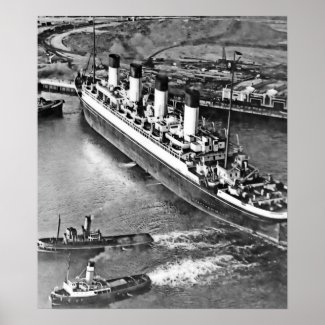
Titanic's Sea Trials by spfino

 - Monday, April 2, 1912 -

 A century ago today, early in the morning, the RMS Titanic put out from Belfast for her Sea Trials.  After 12 hours of being put through her paces, she was pronounced sea worthy.
She sailed the same evening for Southampton, from which she would begin her maiden voyage just eight days later.  For that fateful maiden voyage, command was assumed by one of the most respected sea captains of the day,  Captain Edward John Smith.

Surely any of those involved had no suspicions of what lay ahead, or that, a century later, people the world over would still be fascinated with any and every little detail about the ship, her passengers, and her crew.

Kind of makes you wonder what events in our lifetimes will be so haunting to our descendents a century from now, doesn't it?  Of course, September 11th comes to mind.  But will there be anything else?  That's plenty, in my opinion. 

Related Articles:  Pictures of Titanic -  Books About Titanic for Kids

Saturday, March 3, 2012

Sometimes, in the Wake of a Tragedy

Tragedies at sea cause us to take a closer look at some of the factors involved, and to make changes.   Admitted, it's a reactive process, but that's reality.

So far, two changes - regarding mustering and saluting -  have been made following the sinking of the Costa Concordia.

There had been a muster drill scheduled for the morning of January 14, 2012.  But, the emergency occurred on the evening of the 13th.  Passengers who had not yet been required to assemble at their assigned muster stations to recieve their safety briefing lacked crucial information.  Yet,  Concordia was in compliance with regulations requiring that muster be held in the first 24 hours.  

It's now required that Muster Drill be performed before departure. This new rule was put into place by  Cruise Lines International Association, the European Cruise Council and the Passenger Shipping Association.

As you can read in a story in the New York Times, last week the government of  Italy passed a law banning cruise ship salutes of islands and coastal towns.  Captain Schettino was performing a close sail by or salute to the island of Giglio when the Costa Concordia got too close, and tragedy ensued.  In a salute, the officer at the helm is basically deviating from the planned course, and coming close to land.  This had been being done, on occasion, apparently in order for the ship to 'wave' to those on shore, to give the passengers a closer view, and to generate a little publicity.

Remind you of anything?  Yep.  Titanic immediately springs to mind.

A century ago, the world became accutely and painfully aware that, even though RMS Titanic carried more lifeboat 'seats' than required by law, she still had  enough to accomodate only about 1/3 of her possible passengers + crew.  Though slightly over 700 Titanic survivors were rescued by RMS Carpathia, the lifeboats weren't even filled to capacity.   Following the convention of women and children first, many men stood by while seats went unfilled.  After Titanic, the lifeboat laws were changed.